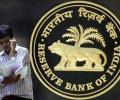
The Reserve Bank has told the International Monetary Fund (IMF) that the objective of frequent interventions in the forex market is to curb excessive volatility, dismissing the Fund's rationale for reclassifying India's exchange rate regime. The IMF, following the Article IV consultation with the Indian authorities, reclassified the status of the exchange rate regime to "stabilised arrangement" from "floating" for period between December 2022 to October 2023. India's Executive Director at IMF K V Subramanian and Senior Advisors Sanjay Kumar Hansda and Anand Singh questioned the selection period adopted by the Fund for analysis and also reclassification of the country's exchange rate regime.

Sri Lanka is currently processing a request by China to allow a research ship to dock in the country, a foreign ministry spokesperson said on Wednesday, a year after a visit by a Chinese spy vessel to the Island nation raised security concerns in India.

India's forex reserves increased by $4.23 billion to $597.51 billion for the week ended May 20 on the back of a high accretion of core currency assets, according to RBI data. The country's foreign exchange reserves had declined by $2.68 billion to $593.28 billion in the previous reporting week ended May 13. During the reporting week, the rise in the reserves was mainly on account of an increase in Foreign Currency Assets (FCA), a major component of the overall reserves, and gold reserves, as per weekly data released by Reserve Bank of India (RBI) on Friday.

The country's foreign exchange reserves declined by a massive $8.062 billion to $580.252 billion in the week ended July 8, according to RBI data. In the previous week ended July 1, the reserves had dropped by $5.01 billion to $588.31 billion. During the reporting week ended July 8, the decrease in the reserves was on account of a fall in the Foreign Currency Assets (FCA), a major component of the overall reserves, and in the gold reserves, RBI said.

Gandhi took a swipe at the government on Twitter by tagging a chart that showed IMF growth projections for 2020-21 for Bangladesh, Myanmar, Nepal, China, Bhutan, Pakistan, Sri Lanka, Afghanistan and India.

US President Joe Biden attended the Association of Southeast Asian Nations gala dinner in Phnom Penh, Cambodia.

Retail inflation declined to a five-month low of 4.85 per cent in March mainly due to cooling food prices, inching towards the Reserve Bank's target of 4 per cent, according to official data released on Friday. The Consumer Price Index (CPI) based retail inflation was 5.09 per cent in February and 5.66 per cent in March 2023. Previously, CPI-based inflation was the lowest at 4.87 per cent in October 2023.

The country's foreign exchange reserves increased by $2.73 billion to $593.32 billion for the week ended June 24 on the back of a surge in the core currency assets, the Reserve Bank of India (RBI) said on Friday. In the previous reporting week, the overall reserves had declined by $5.87 billion to $590.59 billion. In the week ended June 24, the forex reserves swelled due to an increase in Foreign Currency Assets (FCAs), a major component of the overall reserves, and also in gold reserves, RBI said.
India's forex reserves declined by $1.42 billion to $631.53 billion for the week ended in February 25 due to a dip in currency assets, according to the Reserve Bank data released on Friday. The overall reserves had increased by $2.76 billion to $632.95 billion in the previous reporting week. During the reporting week, the foreign currency assets (FCA) declined by $2.23 billion to $564.83 billion.

Prime Minister Narendra Modi on Saturday announced the adoption of the New Delhi Leaders Declaration, a significant victory for India's G20 presidency that came amid increasing tensions and divergent views over the Ukraine conflict.

A third of the global economy will be in recession this year, the IMF chief has said, and warned that 2023 will be "tougher" than last year as the US, EU and China will see their economies slow down. Kristalina Georgieva, the chief of the International Monetary Fund (IMF) made these grim assertions on Sunday during a CBS news programme "Face the Nation." It comes at a time when the ongoing conflict in Ukraine shows no signs of abating after more than 10 months, with spiralling inflation, higher interest rates and the surge in coronavirus infections in China fuelled by the Omicron variant.

The country's foreign exchange reserves decreased by $3.27 billion to $600.42 billion in the week ended April 22, RBI data showed. In the previous week, the reserves had declined by $311 million to $603.69 billion. During the reporting week, the fall in the reserves was on the account of a decline in the Foreign Currency Assets (FCA), a major component of the overall reserves, and gold reserves, Reserve Bank of India's (RBI) weekly data released on Friday showed.
After rising for two consecutive weeks, the country's foreign exchange reserves declined by $306 million to $601.06 billion in the week ended June 3, according to RBI data. In the previous week, the reserves had increased by $3.85 billion to $601.36 billion. It had risen by $4.23 billion to $597.51 billion in the week ended May 20.

'Higher than expected inflation in the US or the European Union, faster than expected tightening by the major central banks, break out of a war in Europe, and withdrawal of portfolio equities from the emerging markets are factors which can result in equity market corrections.'
India's forex reserves rose by $204 million to $532.87 billion for the week ended October 7 on an increase in the value of gold holdings, the Reserve Bank said on Friday. In the previous reporting week, the overall reserves had dropped by $4.85 billion to $532.66 billion. The reserves had been falling for many weeks now as the central bank deploys the kitty to defend the rupee amid pressures caused majorly by global developments.

'We are cautious only on sub-sectors that have seen massive melt-up during the past six months.'

The new government that presents the full Budget for 2024-2025 in July should be ready to restructure the way divestment is managed and implemented, proposes A K Bhattacharya.

Citing details of the contract from the American Federal Procurement Data System, the BBC report claimed that Pakistan signed two contracts with American companies named "Global Military" and "Northrop Grumman" for the sale of 155mm shells.

As Prabhakaran was leaving his house, Rajiv Gandhi called his son Rahul and asked him to fetch his (Gandhi's) bulletproof jacket. He put the jacket on Prabhakaran's back and remarked with his usual charming smile: "Take care of yourself."

India's foreign exchange reserves declined $1.15 billion to $571.56 billion for the week ended July 22, according to RBI data. The reserves has been declining amid continuing volatility in the rupee which has also significantly depreciated against the US dollar. In the previous reporting week, the overall reserves had declined by $7.54 billion to $572.71 billion.

Three years after India declared its goal to become a net-zero economy by 2070, the policy design for achieving the target has begun, with the NITI Aayog forming dedicated multi-sectoral committees to prepare a transition plan. In 2021, India joined a select group of nations that set a target year for becoming net-zero carbon economy. At COP26 in Glasgow, Prime Minister Narendra Modi outlined a five-pronged 'Panchamitra' climate action target for India and committed to a net-zero target by 2070, joining nations like the US, the UK, and China.

Declining for the third consecutive week, India's forex reserves dipped by $77 million to reach $635.83 billion for the week ended December 10, RBI data showed on Friday. In the previous week, the reserves had slid by $1.78 billion to $635.90 billion. In the reporting week ended December 10, the dip in the forex kitty was on account of a decline in foreign currency assets (FCA), a major component of the overall reserves.

Shehbaz, 72, who was the consensus candidate of the Pakistan Muslim League-Nawaz (PML-N) and the Pakistan Peoples Party (PPP), received 201 votes, 32 more than what was required to become leader of the House in the 336-member Parliament.

Employment in India saw a V-shaped recovery after being adversely impacted between April and June 2020 during the Covid lockdown and during April-June 2021, when the second wave struck, said Krishnamurthy V Subramanian, former chief economic advisor, in a paper released on Friday. Subramanian is now serving as executive director of the International Monetary Fund (IMF). From the official survey data of the National Sample Survey Organisation (NSSO), the paper titled 'Employment in India: Data Sources, Facts, and Trends' showed that both worker-population ratio (WPR) and labour force participation rate (LFPR) were higher, while the unemployment rate was lower during October-December 2022 when compared to the corresponding quarter in 2019.

While the economy seems to be on a firm growth path, the fight against inflation is not over yet. Shaktikanta Das seems to be in no hurry. After playing well through a five-year Test match, he doesn't want to get out hit wicket, observes Tamal Bandyopadhyay.
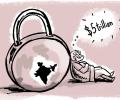
India decisively withstood global headwinds in 2023 and is likely to remain as the world's fastest-growing major economy on the back of growing demand, moderate inflation, stable interest rate regime and robust foreign exchange reserves. Despite widespread pessimism witnessed among the developed nations and the worsening geopolitical situation, India recorded a gross domestic product (GDP) expansion of 6.1 per cent in the March quarter. The growth moved up to 7.8 per cent in the June quarter and was 7.6 per cent in the September quarter. For the first six months of this fiscal, the growth was 7.7 per cent.
The country's foreign exchange reserves declined by $5.01 billion to $588.31 billion in the week ended July 1, according to RBI data released on Friday. In the previous week ended June 24, the reserves had increased by $2.73 billion to $593.32 billion. During the reporting week ended July 1, the fall in the foreign exchange reserves was due to a dip in Foreign Currency Assets (FCA), a major component of the overall reserves, and also in the gold reserves.
Continuing their downward trajectory for the third consecutive week, the country's foreign exchange reserves declined by $2.03 billion to stand at $617.648 billion in the week ended March 25, RBI data showed on Friday. In the week ended March 18, the forex kitty had declined by $2.60 billion to $619.68 billion. It had plunged by $9.65 billion to $622.27 billion in the week ended March 11.
The country's foreign exchange reserves declined $9.65 billion to $622.27 billion in the week ended March 11, according to the latest data from the RBI. In the previous week ended March 4, the reserves rose $394 million to $631.92 billion. It touched a lifetime high of $642.45 billion in the week ended September 3, 2021.

India's forex reserves decreased by $1.145 billion to $640.874 billion for the week ended on November 5 on a fall in currency and gold assets, the Reserve Bank said on Friday. The overall reserves had increased by $1.919 billion to $642.019 billion for the previous reporting week. Foreign currency assets, a major part of the overall reserves, decreased by $881 million to $577.581 billion for the reporting week, the RBI said in the weekly data.

India's decision to ban the export of non-basmati white rice has pushed up global prices, prompting multilateral lending agencies, such as the International Monetary Fund (IMF), to call for a reconsideration of the move. Though nothing has been spelled out yet officially, sources said, the government might consider requests for government-to-government sale of non-basmati white rice, especially to West African nations where India is a major supplier. Also, traders and exporters of specialty regional rice varieties like sona masuri or gobindo bhog feel that they have been short-changed.
The country's foreign exchange reserves increased by $394 million to $631.92 billion in the week ended March 4, the RBI data showed. In the previous week ended February 25, the reserves had declined by $1.425 billion to $631.527 billion. It touched a lifetime high of $642.453 billion in the week ended September 3, 2021.

The country's foreign exchange reserves increased by $2.76 billion to $632.95 billion for the week ended February 18 on a healthy rise in the value of gold reserves and core currency assets, the RBI said on Friday. In the previous reporting week, the overall reserves had declined by $1.76 billion to $630.19 billion. During the reporting week, the rise in overall reserves was on account of an increase in the foreign currency assets (FCA), a major component of the overall reserves, the Reserve Bank of India's (RBI) weekly data released on Friday showed.

Significantly, for the first time, the FATF put Myanmar in the "high risk jurisdictions subject to a call for action", often referred to as the watchdog's black list.

By taking the mutual fund route, investors can take exposure to gilts with small amounts. Over a decade or more, returns from these funds tend to be sound.
The country's foreign exchange reserves declined by $1.76 billion to $630.19 billion in the week ended on February 11, the RBI data showed. In the previous week ended February 4, the reserves had risen by $2.2 billion to $631.95 billion. It touched a lifetime high of $642.45 billion in the week ended on September 3, 2021.

The Reserve Bank of India on Friday raised the GDP growth projection for the current fiscal to 7 per cent from 6.5 per cent earlier on buoyant domestic demand and higher capacity utilisation in the manufacturing sector. Announcing the bi-monthly monetary policy, RBI Governor Shaktikanta Das, however, flagged protracted geopolitical turmoil and global economic fragmentation as risks to the growth outlook. The RBI kept interest rates unchanged at 6.5 per cent in Friday's monetary policy statement.
The country's foreign exchange reserves increased by $2.19 billion to $631.95 billion in the week ended February 4, RBI data showed. In the previous week ended January 28, the reserves had declined by $4.53 billion to $629.76 billion. It touched a lifetime high of $642.45 billion in the week ended September 3, 2021.

India's foreign exchange reserves declined for the second consecutive week, ending $1.78 billion down at $635.91 billion for the week ended December 3, RBI data showed on Friday. In the previous week, the reserves had slid by $2.71 million to $637.68 billion. In the reporting week ended December 3, the dip in the forex kitty was mainly on account of a decline in foreign currency assets (FCA), a major component of the overall reserves.

rediffGURU Sushil Sukhwani underlines the factors you need to consider before you make the decision to study outside India.
 © 2026 Rediff.com - Advertise with us - Disclaimer - Privacy Policy - Sitemap - Feedback - About us - Terms of use - Grievances